The Busiest People in the Room Are Also the Least Creative — Here's the Science
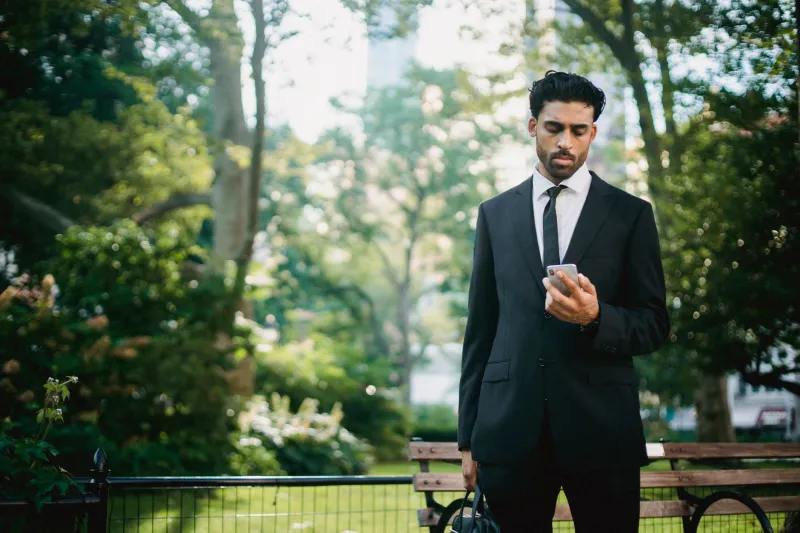
There's a particular kind of exhaustion that's become a status symbol in San Francisco. You know the type — the person who answers Slack messages at 10 p.m., who eats lunch hunched over a keyboard, who measures their worth in calendar blocks and output metrics. They're busy. Visibly, demonstrably, aggressively busy.
And yet, ask them when they last had a genuinely original idea, and they'll probably go quiet.
That's not a coincidence. That's neuroscience.
Your Brain Has a Second Gear — And You're Never Using It
Here's something most productivity culture conveniently ignores: your brain has two distinct operating modes. There's the focused, task-oriented mode — the one you're using when you're writing a brief or crunching numbers. Neuroscientists call this the task-positive network. It's deliberate, linear, and useful for executing known processes.
Then there's the default mode network — the mental state that activates when you're not actively focused on anything. When you're in the shower. Walking without headphones. Staring out a window on the N-Judah. Doing the dishes without a podcast running.
For years, scientists assumed the default mode network was basically the brain idling. Wasted bandwidth. We now know that's completely wrong.
The default mode network is where your brain does its most sophisticated work: connecting disparate ideas, processing unresolved emotions, rehearsing social scenarios, and — critically — generating creative insights. The "aha" moment you had in the middle of a Sunday hike? That was your default mode network doing what it does best, completely uninterrupted.
The problem? Constant connectivity has essentially broken our ability to access it.
Always-On Culture Is Stealing Your Best Ideas
Every notification, every reflexive phone check, every background podcast fills the exact mental space where breakthrough thinking happens. We've colonized our own idle time so thoroughly that genuine mental rest has become almost structurally impossible for the average urban professional.
Think about the last time you sat somewhere — a park bench, a café, a BART car — without reaching for your phone within two minutes. Actually think about it. It's harder to remember than it should be.
When we're always consuming — news, content, messages, metrics — we're constantly feeding the task-positive network and starving the default mode. We feel productive. We feel busy. We feel like we're on top of it. But we're essentially running our creative capacity into the ground.
Researchers at the University of California Santa Barbara found that participants who were allowed to engage in an undemanding, mind-wandering task before returning to a creative problem significantly outperformed those who either rested quietly or kept working on the problem directly. The wandering mind — the one we've been trained to see as distracted and wasteful — was the one doing the heavy lifting.
The Guilt Is the Problem, Not the Rest
Here's where it gets personal. Most of us, even when we do manage to step away, can't fully let go. We take a walk but mentally rehearse our to-do list. We sit in Dolores Park on a Saturday and feel vaguely anxious that we're not being productive. We've so thoroughly internalized the idea that idle time is wasted time that even our downtime becomes a source of stress.
That guilt isn't just unpleasant — it's actively counterproductive. Stress hormones narrow cognitive focus, which is exactly the opposite of the open, associative thinking your default mode network needs to function. You can't force a breakthrough. You have to create the conditions for one, and then get out of the way.
Unstructured time isn't a reward you earn after you've been productive enough. It's a prerequisite for being productive in the first place.
What Reclaiming Unstructured Time Actually Looks Like
This isn't about dramatic digital detoxes or weekend-long retreats (though honestly, no judgment if that's your thing). It's about building small pockets of genuine mental vacancy into an otherwise packed day — and protecting them like the professional asset they are.
A few approaches that actually work for the SF professional lifestyle:
Walk without a destination or a podcast. The Embarcadero, the Panhandle, Crissy Field — San Francisco is genuinely one of the most walkable cities in the country. Use that. Leave the earbuds at home at least a few times a week and let your mind do whatever it wants. Notice what surfaces.
Kill the background noise. We've normalized the idea that silence needs to be filled. Music while working, podcasts while commuting, TV while cooking. Try one daily task — just one — in actual quiet. It'll feel weird at first. That weirdness is your brain recalibrating.
Block time on your calendar that says nothing. Not "lunch." Not "focus time." Nothing. A 30-minute block with no task attached, treated with the same seriousness as a client call. Step outside. Sit somewhere without your laptop. Let yourself be briefly, gloriously unscheduled.
Stop working through your commute. If you're on Muni or BART, you have a built-in window of transition time that most people immediately fill with email or scrolling. That commute can be one of the most generative parts of your day if you let it be genuinely unoccupied. Look out the window. People-watch. Think about nothing in particular.
Keep a low-friction idea capture system. One reason people resist mental downtime is the fear that good ideas will evaporate. Keep a small notebook — analog, not an app — nearby so that when something does surface during your untethered time, you can jot it down and move on. This removes the pressure to "hold onto" thoughts and lets your mind keep wandering freely.
The Counterintuitive Edge
In a city full of people competing to be the most optimized, the most available, the most relentlessly output-focused, there's a quiet competitive advantage hiding in plain sight: the willingness to do less, on purpose, with zero apology.
The professionals who protect their unstructured time — who resist the pull to fill every gap with productivity theater — aren't falling behind. They're thinking more clearly, solving problems more elegantly, and arriving at ideas that sustained busyness would never have produced.
Your best work isn't waiting for you to work harder. It's waiting for you to put the phone down, step outside, and give your brain the one thing it actually needs: a little room to breathe.
Disconnect for a minute. Seriously. Your next big idea is probably already in there — it just can't get a word in edgewise.