The Surprising Case for Doing Absolutely Nothing (Your Next Big Idea Depends on It)
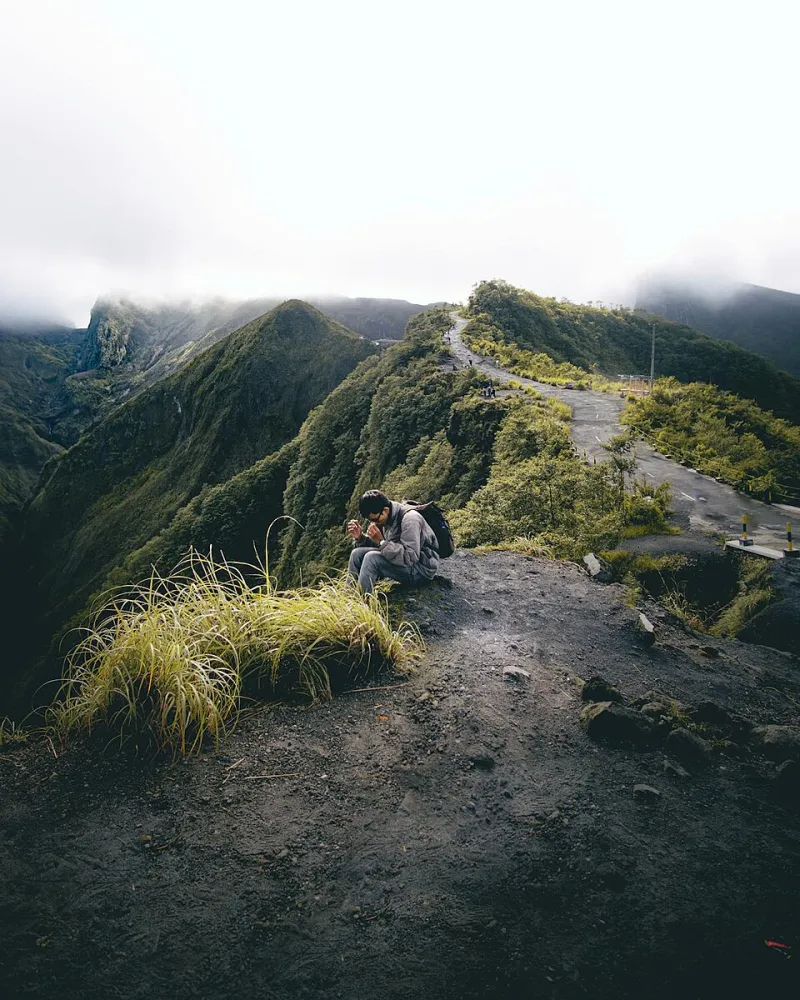
Photo: Semowe, CC0, via Wikimedia Commons
Think about the last time you were genuinely bored. Not waiting-for-a-meeting bored, where you filled the gap with your phone. Not standing-in-line bored, where you queued up a podcast before you'd even stopped walking. Actually, properly, uncomfortably bored — with nothing to do and nothing to look at.
For most people in cities like San Francisco, that memory is hard to locate. We've patched every potential gap in our day with content, noise, or productivity. The commute is a podcast. The lunch break is a scroll. The elevator ride is eleven seconds of email.
And we wonder why we can't think clearly.
Your Brain Has a Hidden Mode — And You Keep Interrupting It
There's a network in your brain called the Default Mode Network, or DMN. Neuroscientists used to think it was basically the brain idling — background noise with no real function. They were spectacularly wrong.
The DMN activates when you stop actively focusing on external tasks. It's the neural infrastructure behind daydreaming, self-reflection, creative synthesis, and what researchers now call "incubation" — the process by which your brain quietly connects dots you didn't even know were related. It's where your shower epiphanies come from. It's why you suddenly solve a problem on a walk that you couldn't crack at your desk for two hours.
"The DMN is essentially your brain's creative workshop," says Dr. Marcus Westfield, a cognitive neuroscientist whose work has examined how attentional demands affect divergent thinking. "But it only opens for business when you get out of its way. Every time you reach for your phone during a moment of mental quiet, you're locking that workshop door."
The problem isn't that we're lazy or undisciplined. It's that we've built an environment — and a culture — that treats any unoccupied moment as a failure of productivity.
Boredom Is Not What You Think It Is
Boredom has a terrible reputation. We associate it with restlessness, with wasted time, with being the kind of person who can't handle the demands of a fast-paced life. In the startup-inflected culture of the Bay Area especially, busyness is status and stillness is suspect.
But the science draws a sharp distinction between unpleasant boredom — the anxious, frustrated kind that comes from feeling trapped — and productive boredom, sometimes called "constructive internal reflection." The latter is less an absence of stimulation and more a permission slip for the mind to wander freely.
Sandy, a product manager at a mid-size tech company in SoMa, stumbled onto this accidentally during a forced digital detox after a burnout episode last year. "My therapist basically told me to spend an hour a day doing nothing — no phone, no podcasts, no tasks. I thought she was joking. I lasted about eight minutes the first time."
By week three, something had changed. "I started having ideas again. Real ideas, not just reactive problem-solving. I came up with a product concept on a walk that my team had been trying to crack for months. I felt stupid for not doing this sooner."
What Creatives and Entrepreneurs Already Know
Talk to enough people who make things for a living, and a pattern emerges. The ideas don't come at the desk. They come in the shower, on a run, while cooking, during the ten-minute walk between the BART station and the office.
Rodrigo, a freelance architect based in the Castro, schedules what he calls "empty afternoons" — two or three hours, once a week, with no client work, no email, and no agenda. "I used to feel guilty about it. Now I protect those afternoons like meetings. They're where my actual design thinking happens."
Author and entrepreneur Baratunde Thurston — who famously documented a 25-day digital detox for Fast Company — described the experience of reclaiming mental downtime as "getting my mind back." The creative output that followed, he noted, was markedly different in quality from what he produced in his most connected, most "productive" periods.
This isn't coincidence. Research from the University of Central Lancashire found that participants who completed a boring task before a creative challenge significantly outperformed those who went straight into the creative work. Boredom, it turns out, primes the brain for exactly the kind of loose, associative thinking that generates original ideas.
San Francisco Is Actually a Great Place to Practice This
Here's the city guide part of this story: San Francisco is, quietly, one of the best places in the country to practice intentional boredom — if you use it right.
The city is full of spaces designed for lingering without agenda. Dolores Park on a weekday afternoon, where the social texture of the city unfolds around you without requiring your participation. The benches along the Embarcadero, where you can watch the bay do its thing for as long as you want. The Japanese Tea Garden in Golden Gate Park, built specifically for the practice of unhurried attention.
The trick is to go to these places without your earbuds. Without a book. Without a plan. Just go and let your mind do what it does when nobody's asking anything of it.
It will be uncomfortable for a while. Sit with that.
How to Schedule Boredom Without Feeling Like You're Slacking
For urban professionals whose identities are partially built around output and hustle, "doing nothing" needs reframing before it feels acceptable. So here's the reframe: you're not doing nothing. You're engaging in active cognitive restoration. You're investing in the quality of your thinking. You're doing the one thing that no productivity app can do for you.
A few ways to start:
The commute experiment. Pick one commute per week — bus, BART, walking — and do it with no audio, no reading, no scrolling. Just be a person moving through a city. Notice what your mind does.
The 15-minute window. Block 15 minutes on your calendar three times a week labeled "thinking time" or "open space." Treat it with the same respect as a meeting. Do nothing during it. No agenda, no output required.
The analog walk. A walk without a destination or a podcast is radically different from a walk with one. Try it once. The city looks different when you're not consuming it.
The morning buffer. Resist reaching for your phone for the first 20 minutes after waking up. Let your brain surface whatever it's been quietly processing overnight before you flood it with the day's inputs.
The Most Counterintuitive Productivity Hack You'll Ever Try
We spend enormous energy optimizing our workflows, our inboxes, our morning routines. We take courses on focus and read books on deep work. And yet we keep overlooking the most powerful cognitive tool we have — the one that's always available, completely free, and requires nothing but the willingness to stop.
Your best ideas aren't hiding in your Notion dashboard or your next productivity framework. They're in the quiet. They're in the gaps you keep filling. They're in the boredom you've been running from.
Stop running. See what shows up.