We Tried to Rebuild the Neighborhood Hangout From Scratch. Here's the Playbook.

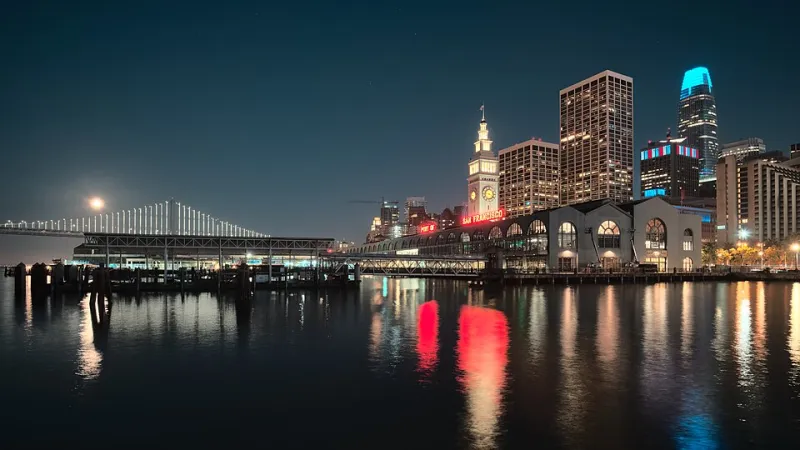
Photo: Holger Krisp, CC BY 3.0, via Wikimedia Commons
Sociologists have a term for the spots that aren't home and aren't work: third places. The bar where everybody knows your order. The court where the same ten guys show up every Saturday. The café where you ran into people you'd never planned to see. For most of the last century, these places did the invisible work of community — casual, unplanned, low-stakes social contact that made a neighborhood feel like a neighborhood.
Then, gradually and then suddenly, the third place became a feed. Why knock on doors when the group chat never sleeps? Why join a league when the algorithm serves you a highlight reel? We replaced the hassle of showing up with the ease of scrolling, and told ourselves it was roughly the same thing.
It isn't. And we wanted to find out what it would take to get the real thing back.
The Experiment: Four Weeks, Four Events, Zero Group Chats
The rules were simple. Every week for a month, our editorial team would host one in-person event, open to readers and friends-of-friends, in different corners of San Francisco. No event pages, no RSVP apps, no livestreams. Word of mouth and a paper flyer in two coffee shops. That's it.
Week one: a board game night in the Mission. Seven people showed up, five of whom knew nobody. The first twenty minutes were excruciating in a way that's hard to describe to anyone raised on asynchronous communication. Then someone lost spectacularly at a game about trading spices, and the room cracked open. People stayed two hours past the end time.
Week two: a morning hike at Land's End. Eleven people, one dog, zero phones out on the trail — mostly because the wind and fog made holding one genuinely unpleasant. Bless the fog. Conversations on a hike have a built-in structure: you walk side by side, which turns out to be far easier for talking than staring across a table.
Week three: a pickup volleyball game at Dolores Park. The turnout was smaller, four on four, but this was the week strangers started exchanging numbers — actual phone numbers, written down — to organize the next game without us.
Week four: a potluck in a rented community room. Eighteen people. Three of them had come to a previous week and brought someone new. That's when we realized the experiment had stopped being ours.
What We Learned
Three things, mostly:
The bar to attendance is scheduling, not interest. Nearly everyone we invited said some version of "I've been wanting something like this." The feed didn't kill community by being more appealing; it killed it by being easier. A fixed time, a fixed place, and a person expecting you is the entire unlock.
Awkwardness is a toll, not a wall. Every event had a ten-minute window of stilted small talk. Every event got past it. Everyone pays it, everyone forgets it.
The third place belongs to whoever keeps showing up. By week four, attendees were proposing venues and themes. We'd accidentally built a thing that no longer needed us — which is the only kind of community that lasts.
The Repeatable Playbook
Want to build your own? Here's the distillation, no editorial team required:
- Pick a rhythm, not an event. Weekly or biweekly, same day, same time. Consistency beats novelty.
- Choose something with a built-in activity. Games, hikes, sports, cooking. Shared doing beats forced mingling.
- Cap the tech. A basket for phones at the door works wonders without a single lecture.
- Recruit three, invite thirty. Three committed regulars make any event survive. Thirty invites usually yield eight to ten showups. That's plenty.
- Use physical anchors. A flyer in a café, a whiteboard at the venue. Analog visibility recruits the neighbors the algorithm will never reach.
- Let it drift. Your job as a founder is to show up, welcome people, and then get out of the way.
The third place didn't die of natural causes. It was outsourced — to the feed, which promised connection and delivered content. The good news is that the original product is still better, and the barrier to re-entry is one evening, one room, and one person willing to say: we're doing this again next week. You should come.