The Hobbies You Loved Are Fading—And Your Phone Is Why
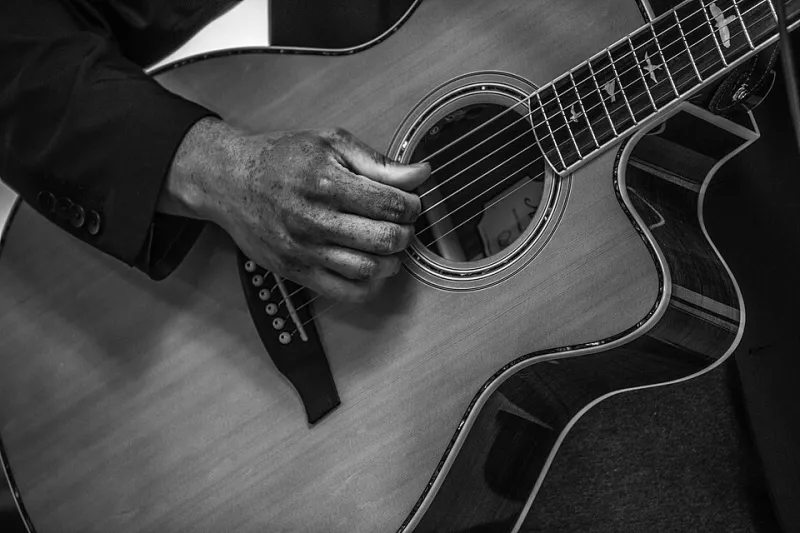
Photo: Wilfredor, CC0, via Wikimedia Commons
I used to cook. Not in the Pinterest-recipe-screenshot-that-you-never-actually-make way. I mean I cooked—improvised, tasted, adjusted, occasionally ruined something spectacular and learned from it. I had a cast iron pan I was genuinely proud of and opinions about stock that I'm slightly embarrassed to admit I still have.
Sometime in the last three years, that mostly stopped. Not because I decided to stop. I just... started ordering more. Started watching cooking videos instead of cooking. Started following accounts about food as a replacement for the actual experience of making it. The pan is still there. It needs to be re-seasoned.
If any version of this sounds familiar, you're not lazy and you're not a quitter. You're experiencing something researchers are starting to call skill rust—the gradual erosion of practiced abilities that happens not from neglect exactly, but from the substitution of consumption for creation.
The Consumption Trap
Here's the cognitive distinction that matters: consuming and creating use your brain in fundamentally different ways. When you watch a video of someone playing guitar, your brain's mirror neuron system activates and you get a faint echo of the experience. It feels like engagement. It even feels, in a low-grade way, like participation. But the neural pathways that build actual skill—the motor memory, the problem-solving loops, the frustration-tolerance that leads to mastery—those aren't being touched.
Worse, consuming high-quality versions of a thing you used to do can actually increase the gap between your current skill level and your internal standard. You watch a professional chef deglaze a pan with the casual confidence of someone who's done it ten thousand times, and suddenly your own kitchen feels inadequate before you've even turned on the stove. This is sometimes called the "taste gap"—your taste develops faster than your skill when you're consuming more than you're creating—and the internet has turbocharged it.
Social media has added another layer. Platforms that show you only the polished, finished, aesthetically perfect version of other people's hobbies make your own messy, in-progress, imperfect practice feel not just humble but embarrassing. Why play guitar badly in your living room when you could watch someone play it perfectly on YouTube? The answer—that the badly-played guitar in your living room is actually building something real in you—isn't immediately emotionally satisfying. And emotionally satisfying is what the algorithm is optimized for.
What Skill Rust Actually Feels Like
It's subtle, which is part of why it's so easy to miss. It's not that you forget how to do things. It's that you lose the appetite for the friction involved in doing them.
Learning anything real involves a specific kind of discomfort—the gap between where you are and where you want to be, held in sustained attention long enough to close it slightly. That process requires a tolerance for not-yet-knowing that's genuinely difficult to maintain when your nervous system has been calibrated to expect instant resolution.
A smartphone gives you answers before you've fully formed the question. It resolves curiosity before curiosity has a chance to deepen into genuine interest. And over time, that recalibrates your threshold for what counts as "worth the effort." Learning a new chord voicing starts to feel like too much. Trying a recipe that requires actual technique starts to feel like a project. Sitting with a sketchbook and not knowing what to draw starts to feel unbearable.
None of this is a moral failing. It's a predictable neurological response to an environment that's been deliberately engineered to make friction feel aversive.
San Francisco's Particular Version of This Problem
There's something specific about living and working in a tech-saturated city that amplifies this dynamic. The culture here celebrates optimization, efficiency, and the outsourcing of anything that can be outsourced. Why cook when Caviar exists? Why learn directions when you have Maps? Why practice small talk when you can text?
The problem is that some things can't be outsourced without losing the point of them entirely. The value of cooking dinner isn't just the dinner. It's the process—the sensory engagement, the problem-solving, the satisfaction of having made something with your hands. The value of knowing a neighborhood isn't just knowing where things are. It's the embodied, spatial understanding of a place that only comes from having walked it, gotten a little lost, figured it out.
San Francisco has some of the richest offline infrastructure of any American city—community ceramics studios, independent music venues that host actual lessons, neighborhood cooking schools, parks that reward the people who actually show up in them. Most of us are walking past all of it while looking at our phones.
The One-Skill Framework
The way back isn't a complete lifestyle overhaul. It's smaller than that. Pick one thing.
Not a new skill you think you should have. Not something optimized for a LinkedIn post or an Instagram story. Something you used to love, or always meant to try, that has no obvious productivity payoff. The guitar that's been in the corner. The language you studied for two semesters in college. The bread recipe you bookmarked in 2019 and never made.
Give it thirty minutes, three times a week, with your phone in another room. That's it. No streaming tutorials while you practice (tutorials after, if you need them, but not during). No photographing the process. No posting the result. Just you and the thing, in the same room, with enough time for something to actually happen.
The first few sessions will feel slow and slightly uncomfortable. That's the sensation of your attention span stretching. It's not a sign you're doing it wrong—it's a sign you're doing it right.
What you're building isn't just a skill. You're rebuilding the capacity for sustained engagement that makes everything else richer—your relationships, your work, your ability to be actually present in your own life rather than documenting it from a slight remove.
The Thing About Mastery
There's a specific pleasure that comes from getting genuinely good at something over time that no amount of content consumption can replicate. It's not the pleasure of being entertained. It's the pleasure of being capable. Of knowing that you made something, solved something, played something that didn't exist before you put your attention into it.
That pleasure is available to you. It's waiting in the cast iron pan, the guitar case, the sketchbook with the blank pages. It just requires that you show up for it—without your phone, without an audience, without a tutorial playing in the background.
The screen will wait. The skill won't.


