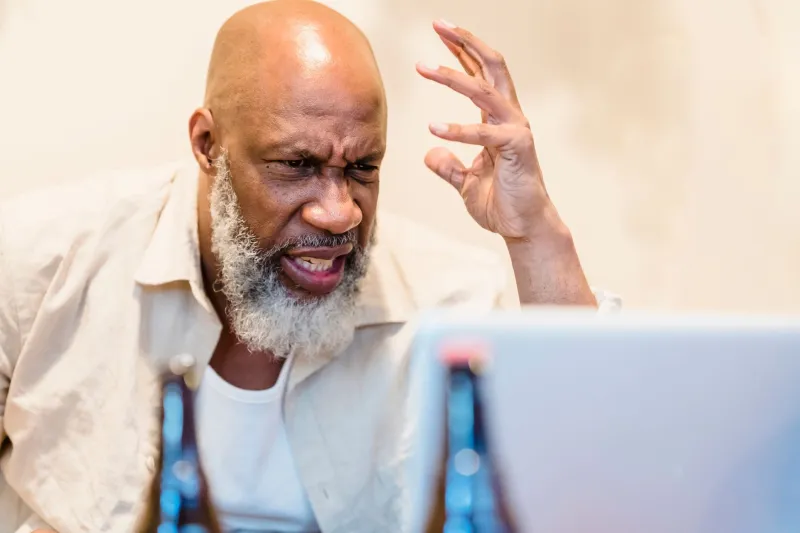
The Internet Went Down and I Got More Done by Noon Than I Had All Week

The Outage Nobody Asked For (But Everybody Needed)
It was a Tuesday in February when Marcus Chen's Comcast router decided it was done. No warning, no blinking lights, just silence. Marcus, a 34-year-old UX strategist who works remotely out of his Mission District apartment, did what most of us do first: he restarted the router. Then he called support. Then he sat there, staring at his laptop, waiting.
Except he didn't just wait.
"By 11 a.m. I had finished a competitive analysis I'd been 'almost done' with for two weeks," he told us. "I wrote three pages of actual strategic thinking. Real thinking, not just reorganizing tabs. It was embarrassing how much I got done."
Marcus isn't alone. Ask around your office — or your Slack channel, if you must — and you'll find a surprisingly common confession buried underneath the productivity theater of modern work life: some of the most genuinely focused, creatively alive workdays people can remember happened because the internet broke.
Not because of a new app. Not a time-blocking system. Not a productivity coach. The Wi-Fi just died, and suddenly everything clicked.
What's Actually Competing for Your Attention
Here's the thing nobody wants to admit about modern knowledge work: connectivity is the job and the obstacle. We need the internet to do our work, and the internet is also the reason we can't do our work.
The average US knowledge worker now switches between tasks roughly every three minutes, according to research from UC Irvine. And the cost of each switch isn't just the seconds lost — it's the cognitive ramp-up required to get back into deep focus afterward. That can take up to 23 minutes per interruption. Do the math on a workday with 30 digital interruptions and you're left with almost no unbroken thinking time whatsoever.
But when the connection drops, a strange triage happens automatically. The Slack pings stop. The email refreshes stop. The reflex to open a new tab and check something — anything — stops. What's left is just you and the work that was already open on your screen.
"I realized I had seventeen tabs open," said Priya Nair, a content strategist based in Hayes Valley. "When the internet went out I had to just... work with what I had. It was like the outage forced me to commit to the thing I was already doing instead of constantly hedging with more research."
The Friction We Don't Know We're Carrying
There's a concept in behavioral psychology called friction — the small resistances built into a system that either slow us down or speed us up depending on how they're designed. Tech companies are masters at removing friction between you and the next dopamine hit. Every scroll, every refresh, every notification is engineered to feel effortless.
The problem is that effortless distraction is still distraction. And unlike the obvious time-suck of, say, watching three hours of Netflix, the micro-distractions of connectivity feel like work. Checking email feels productive. Scanning industry news feels like staying sharp. Responding to Slack at 10 a.m. feels responsible.
None of it is the actual work.
When the internet disappears, all that false productivity disappears with it. What remains is a strange, almost uncomfortable clarity. You know exactly what you were avoiding. You know exactly what needs to get done. And with nothing to reach for, you reach for the task itself.
"I finished a proposal draft I'd been circling for a week," said Jordan Flores, a freelance brand consultant who experienced a PG&E-related outage at his co-working space in SoMa. "I kept telling myself I needed to do more research. But when I couldn't research anything, I just had to write what I actually knew. And it was good. It was better than what I'd been trying to do."
Why We Never Recreate It on Purpose
So here's the paradox that makes all of this genuinely strange: we know this works. Many of us have lived it. And almost none of us intentionally recreate the conditions.
Why?
Part of it is identity. Being reachable has become a professional virtue in American work culture. Going offline feels like going AWOL. There's a social contract baked into modern employment that says availability equals commitment, even when all that availability is actively undermining the quality of what you produce.
Part of it is anxiety. The internet outage forces disconnection without giving us a choice, which removes the guilt. When we choose to go offline, we spend the first twenty minutes wondering what we're missing, which defeats the purpose entirely.
And part of it is that we've genuinely lost the muscle. Extended focus isn't something most of us practice anymore. It's a skill that atrophies, and rebuilding it voluntarily requires a kind of discomfort that's hard to choose when the alternative is right there in your pocket.
What You Can Actually Do About It
You don't have to wait for Comcast to solve your focus problem. A few things that actually work:
Kill the connection deliberately. Use your laptop's Wi-Fi toggle, or try apps like Cold Turkey or Freedom that block internet access for set periods. Schedule two-hour blocks where you're working with only what's already open — no new tabs, no refreshing, no exceptions. Treat it like the outage happened.
Commit to one open document. The multi-tab hedging habit is real. Before you go offline, decide what you're working on and close everything else. One document. One task. The constraint is the point.
Let the first 10 minutes be uncomfortable. The itch to check something will hit fast. Sit with it. This is the part that actually builds the focus muscle back. It passes, and what's on the other side of it is the kind of thinking you've been telling yourself you don't have time for.
Notice what you reach for. When the internet is gone and you feel the pull to do something else, pay attention. That restlessness is information. It usually means you're avoiding the hardest and most important part of whatever you're working on.
Marcus, for his part, has started scheduling what he calls "fake outages" — two-hour windows on Tuesday and Thursday mornings where his phone goes in a drawer and his laptop runs offline. He says it's the closest thing to a superpower he's found in ten years of working remotely.
"I used to think I worked best under pressure," he said. "Turns out I work best under silence. Those aren't the same thing at all."
The Wi-Fi is going to come back on. The question is whether you'll notice what you had without it.