Night Mode Won't Save You: The Real Reason You're Still Scrolling at Midnight

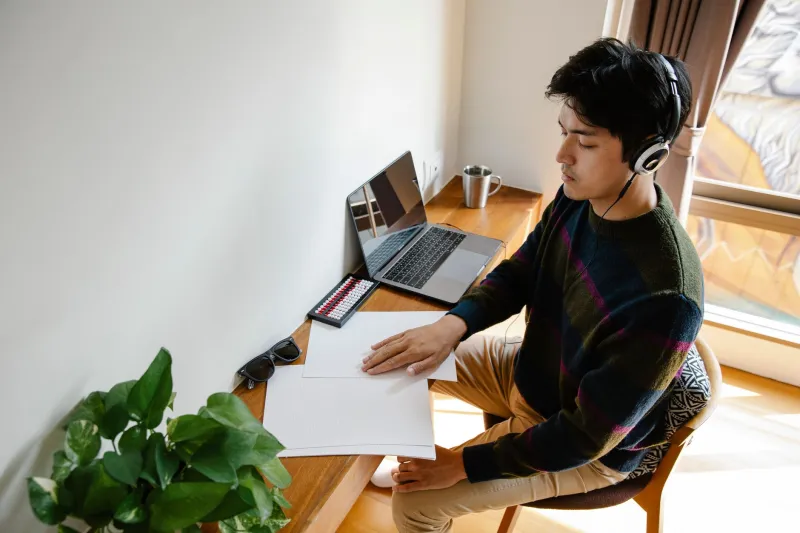
Photo: Tiia Monto, CC BY-SA 3.0, via Wikimedia Commons
Let's be honest. You've done everything right. You've got the amber glow, the scheduled downtime, maybe even one of those pastel-colored app blockers with a little lotus flower for an icon. Your phone is basically wearing pajamas. And yet, there you are at 12:47am, watching a stranger in Ohio explain how to restore antique furniture, wondering how you got here.
Night mode is a comfort blanket. It addresses exactly one thing—the wavelength of light hitting your retinas—and completely ignores the six or seven psychological mechanisms that actually keep you glued to the screen. We've been sold a hardware fix for a software problem.
Your Brain at Night Is Not Your Brain
Here's the thing about evenings that nobody in the productivity space wants to admit: your prefrontal cortex, the part of your brain responsible for impulse control and long-term thinking, starts checking out well before your body does. Decision fatigue is real, and by 10pm, most urban professionals have already made hundreds of small choices throughout the day. Your willpower isn't weak. It's genuinely depleted.
App designers know this. They've known it for years. The recommendation algorithms that power your feeds aren't optimized for daytime—they're tuned for the late-night vulnerability window, when resistance is lowest and emotional content lands hardest. The video that would've made you mildly curious at 2pm makes you feel genuinely moved at midnight. That's not a coincidence.
Dopamine, the neurotransmitter most associated with reward-seeking behavior, doesn't disappear at night. It actually becomes easier to trigger with lower-quality stimuli when you're tired. A mildly interesting post that you'd scroll past at lunch becomes genuinely compelling at 11:30pm. Your brain is looking for the easiest available reward, and your phone is the most frictionless option in the room.
The Design Tactics Nobody Talks About
Beyond the algorithm, there's the architecture. Infinite scroll was specifically designed to eliminate natural stopping points. Before it existed, you'd reach the bottom of a feed and have a moment of choice. Now, that moment never comes. There's always more, and your tired brain interprets "more" as "haven't finished yet."
Autoplay is the same trick in video form. The next episode starts in three seconds. That three-second window is shorter than the time it takes to consciously decide you want to keep watching. It bypasses intention entirely.
Notifications scheduled for evening hours—the "someone liked your photo from three years ago" variety—are timing-engineered. They arrive when you're winding down because that's when you're most likely to open the app and stay. It's not random. It's a business decision.
Night mode softens the light. It does absolutely nothing about any of this.
Why the Pre-Sleep Hours Actually Matter
Sleep researchers have a term: sleep pressure. It's the biological drive to sleep that builds throughout the day and is supposed to peak in the evening, guiding you toward rest. Evening screen use—regardless of blue light—disrupts this process by keeping your nervous system in a low-grade alert state. You're not fully stimulated, but you're not winding down either. You're hovering in a kind of artificial twilight that confuses your body's natural cues.
The result isn't just that you fall asleep later. It's that the quality of sleep you do get is shallower. And here's where it gets consequential: the brain consolidates memories, processes emotions, and literally clears metabolic waste during deep sleep stages. When you shortchange that process with an extra forty-five minutes of scrolling, you're not just tired the next day. You're cognitively impaired in ways that compound over time—reduced creativity, slower problem-solving, shorter emotional fuse.
Your morning routine cannot undo what your midnight habits are doing to your sleep architecture. No amount of cold plunges or journaling will fully compensate for a brain that didn't get to properly restore itself.
What Actually Works (And It's Simpler Than You Think)
The strategies that genuinely move the needle on evening screen use have one thing in common: they reduce friction for the offline alternative rather than increasing friction for the phone.
Charge your phone outside your bedroom. This sounds obvious because it is. It's also the single highest-impact change most people can make. If the phone isn't within arm's reach, the midnight grab doesn't happen. Buy an actual alarm clock. They cost eleven dollars.
Create a physical transition ritual. Your brain responds to environmental cues. A cup of herbal tea, a specific lamp you turn on, a book you leave on the nightstand—these are context signals that tell your nervous system the mode is shifting. Apps can't compete with a well-designed physical environment. This is what behavioral scientists call "environmental design," and it works because it doesn't rely on willpower at all.
Set a hard stop for anything work-adjacent. Checking email at 9pm doesn't just steal thirty minutes—it re-activates the stress response associated with professional obligations, making it physiologically harder to relax. The problem isn't just time, it's neurological state.
Give boredom somewhere to go. A lot of evening scrolling is actually restlessness in disguise. If you don't have an answer to "what do I do instead," your hand will find the phone on autopilot. A stack of magazines, a puzzle, a sketchbook, a playlist you actually listen to—these aren't quaint suggestions. They're exit ramps.
The Part Nobody Wants to Hear
Night mode is a feature that makes tech companies look responsible without actually asking you to use their product less. It's the wellness equivalent of a fast food chain adding a side salad. The salad is real. It's just not the point.
The real shift isn't about managing your phone better at night. It's about deciding that the hours before sleep are yours—not available for harvest by platforms whose business model depends on your attention. That's a values decision, not a settings decision.
Your sleep is the foundation of everything else you're trying to do. The morning clarity, the creative thinking, the patience with people you love—it all runs downstream from how well you actually rested. No app update is coming to protect that for you.
Put the phone in another room. See what happens.